Should children complete routine jobs in order?
By Rachel Hassett ·
Last reviewed
Learn when a fixed job order helps, when children can choose any remaining task and how All Set supports both routine styles.
Children should complete routine jobs in order when one step genuinely depends on another. If the sequence does not matter, letting them choose from the remaining jobs may make the routine easier to use.
All Set supports both options. In a fixed-order routine, the next unfinished job is available to tick off and later jobs stay locked. In any order, children can choose from their remaining jobs.
Fixed order or any order?
| Question | If yes | If no |
|---|---|---|
| Does one job depend on another? | Try fixed order | Any order may work |
| Does choosing between available jobs add too many decisions? | Try fixed order | Keep the flexible list |
| Is the locked sequence creating an unnecessary obstacle? | Unlock jobs that do not depend on each other | Keep the order that reflects the real routine |
When does a fixed order make sense?
Use a fixed order when completing one job changes what should happen next.
For example:
- put on socks before putting on shoes
- get dressed before putting on shoes
- pack the lunchbox before closing the school bag
A fixed sequence can also reduce the number of choices on screen. The child sees the next available job instead of deciding between everything that remains.
When is any order more useful?
Use any order when the jobs are independent.
If brushing hair, filling a drink bottle and packing a reader folder can happen in any sequence, there may be no reason to lock them. The child can choose a job, finish it and see what remains.
That flexibility can also help siblings using the same space. One child can brush their teeth while another collects their bag, instead of everyone waiting for the bathroom like it is a tiny airport runway.
How does the setting work in All Set?
When a parent creates or edits a routine, they can choose whether jobs must be completed in the displayed order or can be completed in any order.
Children still see their assigned jobs, pictures and progress. They can tap Hear it to hear a task aloud and tick it off when it is done.
The setting changes which job is available next. It does not change the jobs assigned to each child.
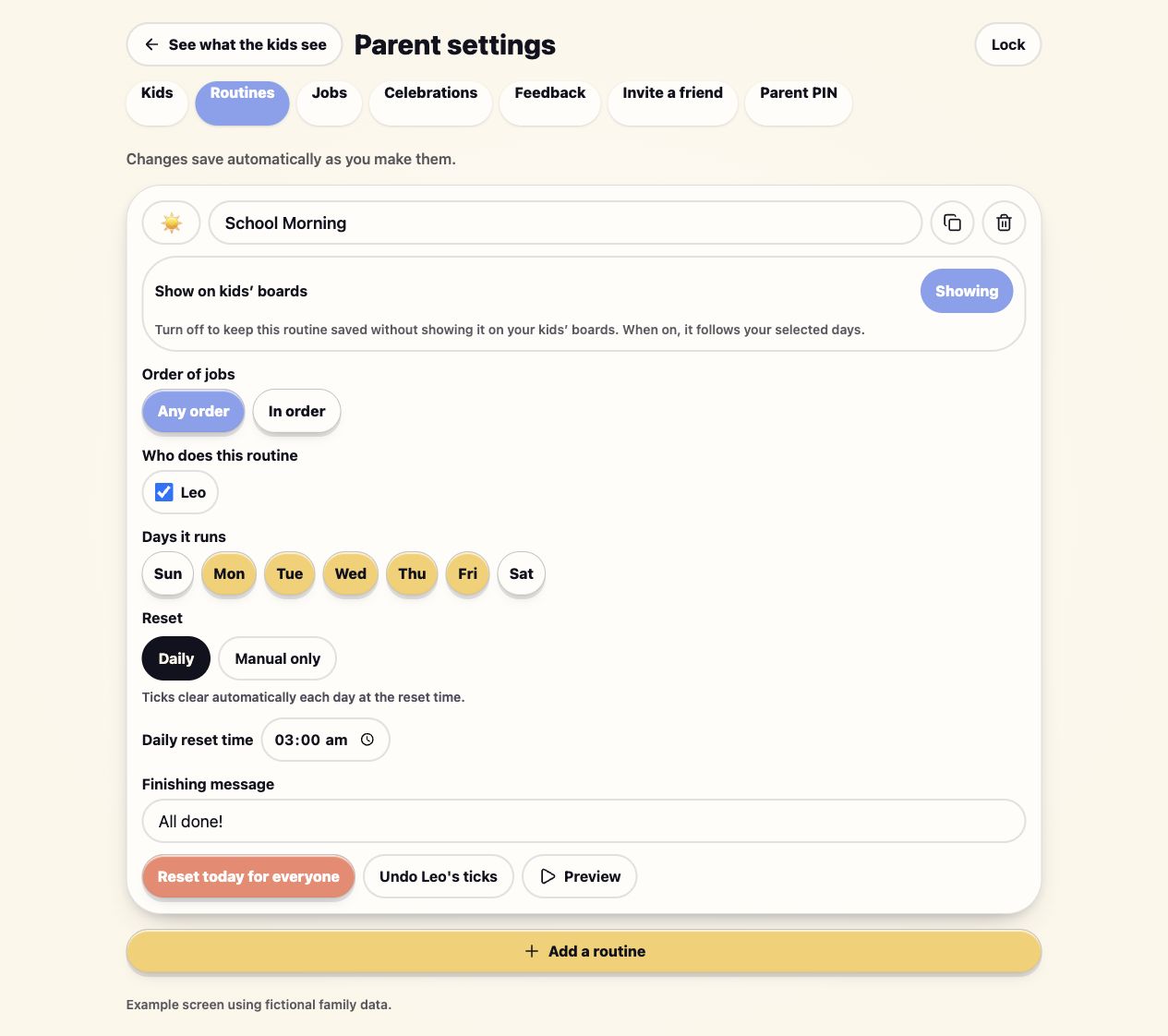
Example routine with Any order selected. Child shown is fictional.
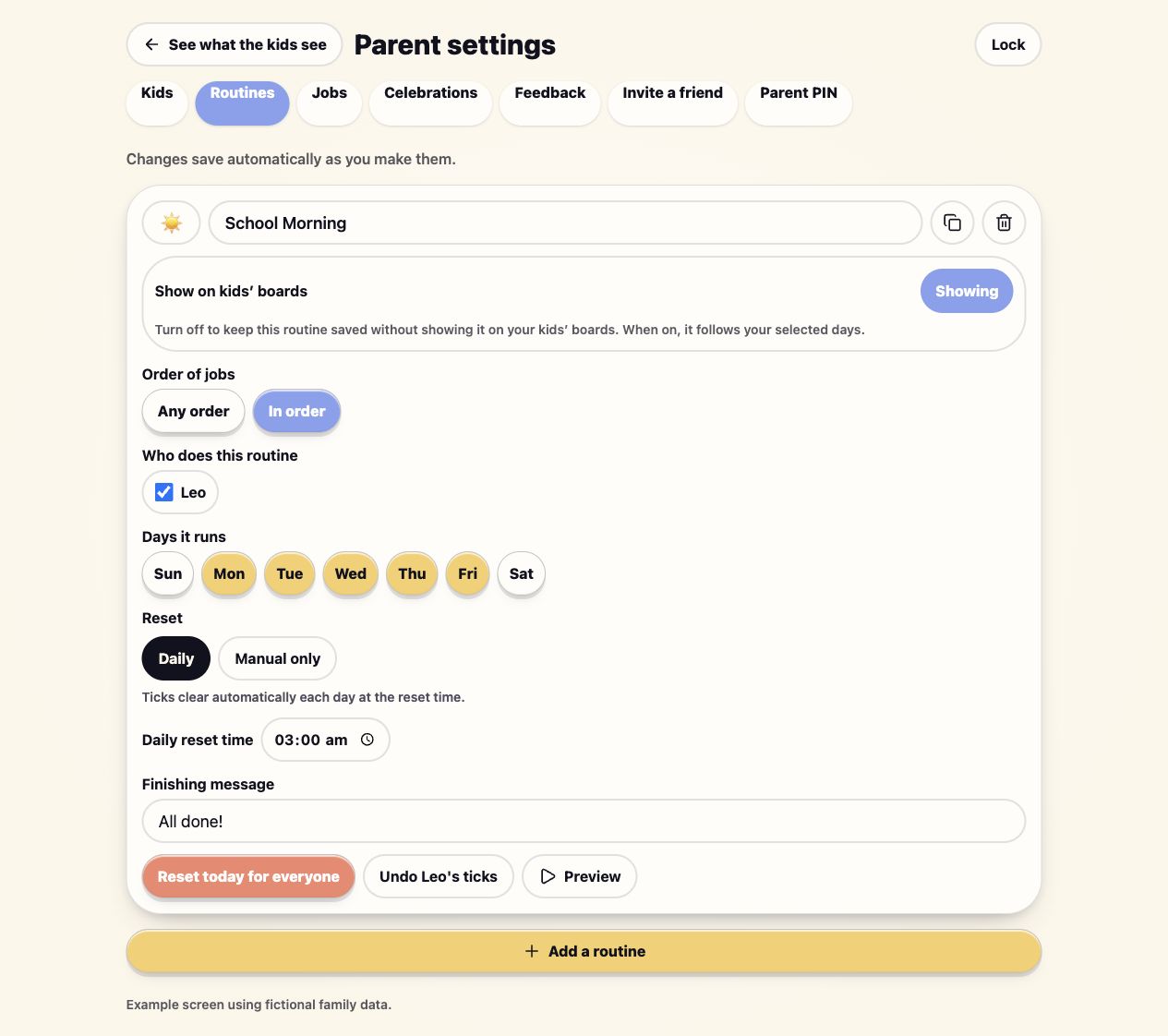
Example routine with In order selected. Child shown is fictional.
Should every routine use the same setting?
No. Choose the setting for the routine.
A school-morning routine may have a few steps that depend on each other. An after-school unpacking routine may work in any order. A bedtime routine might need a clearer sequence in one household and more flexibility in another.
All Set lets families create more than one routine, so the choice does not have to cover every part of the day.
What if the fixed order causes arguments?
Check whether the order is necessary.
If the child wants to put on socks before brushing their hair and nothing depends on the difference, unlocking the order may remove an unnecessary obstacle. If the order does matter, make sure the reason is reflected in the routine itself.
You can also shorten the list or move the difficult job. For other sticking points, check what to try when a child ignores the routine chart. A setting should support the sequence you already need, not create a stricter household constitution.
What if any order becomes distracting?
Reduce the number of choices or try the fixed-order setting.
A board full of available jobs can be a lot to scan. Clear pictures and short task names help, but some children may find one available next step easier to follow.
There is no universally better option. The useful setting is the one that matches the actual dependencies in your routine and the way your child uses the board.
Can siblings use different jobs in the same ordered routine?
Yes. Parents choose which children take part and can remove a child from a job that does not apply to them.
The family can follow one routine while each child sees only their assigned jobs. Read how All Set works for more than one child.
See how All Set works and check whether your device is suitable.